.svg)
Regional Conference on Prosperity through Solidarity: Accelerating the ASEAN SSE-SDG Roadmap
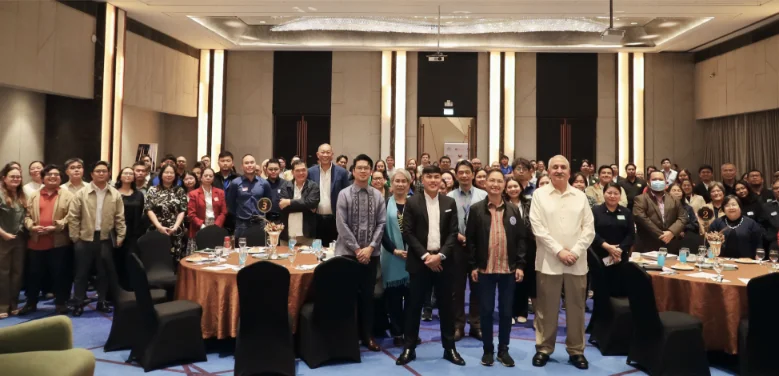
MANILA, Philippines — As the Philippines assumes the ASEAN Chairmanship in 2026, the National Anti-Poverty Commission (NAPC), together with co-convenors, the Department of Trade and Industry (DTI), the Quezon City Government, the Asian Solidarity Economy Council (ASEC), and the Bayan Family of Foundations (BFF), held the Regional Conference on Prosperity through Solidarity: Accelerating the ASEAN SSE-SDG Roadmap on May 20–21, 2026.
The two-day forum served as the country’s official launchpad to advance the ASEAN Social and Solidarity Economy (SSE) - Sustainable Development Goals (SDGs) Roadmap 2026–2030, bringing together government leaders, international development practitioners, UN agencies, and social enterprise champions from across the region and beyond.
With the theme, "Navigating the Future: The Social and Solidarity Economy as a Driver of ASEAN Prosperity", the conference featured sessions designed to deliver immediate learning outcomes, align regional stakeholders on the roadmap, and mobilize key partners to support the growing SSE movement.
The conference was structured into eight panels focusing on foundational public-private partnerships, regional success stories, financing and public policy innovations, social impact assessment, and roadmap implementation strategies.
A Call For A Unified Action
Hon. Mayor Joy Belmonte, Quezon City Mayor, formally opened the conference by underscoring the critical importance of multi-layered partnerships in advancing SSE across the region. Anchoring her remarks in the ASEAN SSE-SDG Roadmap as the definitive regional blueprint for community empowerment and sustainable growth, she pointed to Quezon City as a living proof of concept.

“The Quezon City Government has consistently capacitated civil society organizations (CSOs) through targeted workshops and seminars, transforming unempowered members of basic sectors into active economic actors.
By implementing localized programs that directly support nano-enterprises, MSMEs, and community savings groups, the city has provided practical pathways for QCitizens to secure sustainable livelihoods, build economic resilience, and actively participate in local development.”
In her remarks, Mayor Belmonte also declared Quezon City’s strategic goal of becoming the Social Enterprise Capital of the Philippines by 2028, driven by a co-governance model built on accessible financing and community-centered programs.
Undersecretary Blesila Lantayona, Supervising Head of DTI, echoed this call in her keynote address, emphasizing the need for a unified, multi-sectoral ecosystem.
“The Department of Trade and Industry calls for a unified, multi-sectoral ecosystem linking government, civil society, academe, and the private sector, and for LGUs to lead localization through context-sensitive, community-led solutions.
Backed by continuous capacity building, genuine financial inclusion, and rigorous monitoring, this approach will secure lasting economic resilience and expanded rights and opportunities for every Filipino community,” said Usec. Lantayona.

Meanwhile, Secretary Lope Santos III, Director General of NAPC, presented the conference overview and framed the ASEAN SSE-SDG Roadmap 2026–2030 as a crucial framework for equitable regional growth. He highlighted the Philippines' firm commitment to the UN SDGs, aligning these global targets with national frameworks such as the Philippine Development Plan 2023–2028 and AmBisyon Natin 2040 — advancing President Marcos Jr.'s vision of a Bagong Pilipinas where development is truly shared by all.
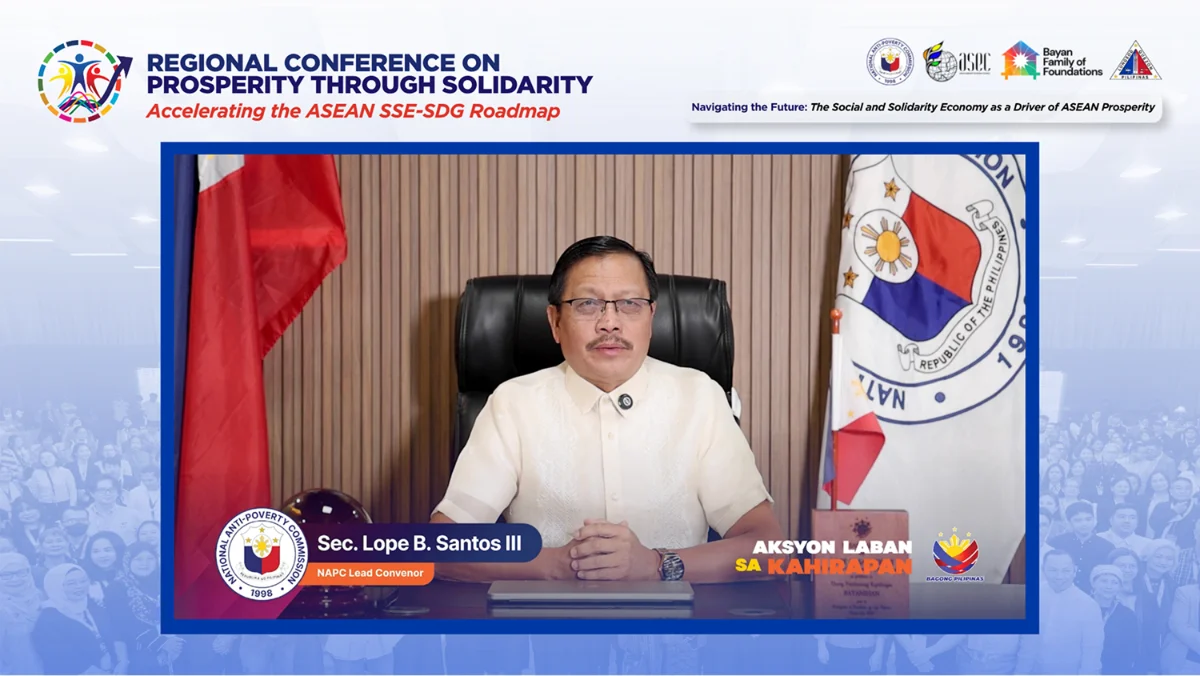
“The ASEAN SSE-SDG Roadmap 2026–2030 is a crucial plan that can help steer the direction of this collective journey and ensure that our efforts are sustained and our gains are not lost. This roadmap is also central to forming strategies that respond to new and emerging challenges we may face,” said Sec. Lope Santos III.
He concluded by expressing hope that the ASEAN roadmap will serve as a replicable global model for cross-border cooperation and sustainable prosperity.
Day One: Building the SSE Ecosystem From the Ground up
The first day's discussions centered on how governments, civil society, and the private sector can work together to build an inclusive, community-driven SSE ecosystem. Speakers explored solidarity-based development frameworks, coordinated social protection systems, and grassroots empowerment as practical strategies for poverty reduction across ASEAN.
Prof. Carlo Sagun, President and CEO of BFF, joined Panel 1 on Public, Private, and Civil Society Partnership in Building the SSE Ecosystem. He presented BFF's work in institutionalizing SSE initiatives at the grassroots level — particularly through partnerships with the Department of the Interior and Local Government (DILG) and NAPC, using Civil Society Organization (CSO) Desks as formal entry points within local governance structures.
“By partnering with the Department of the Interior and Local Government and National Anti-Poverty Commission, we are anchoring Social Solidarity Economy initiatives directly within local governance via Civil Society Organization Desks.
This grassroots formalization aligns seamlessly with the DTI policies, creating a clear, legal pathway for SSE recognition and permanent structural support,” said Prof. Sagun.

Day Two: Measuring Impact, Financing Innovation, and the Care Economy
The second day deepened discussions on financing innovations, enabling public policies, and social impact measurement within the SSE sector. Panelists also examined the role of the care economy in advancing shared social responsibility and the importance of placing communities at the center of development assessment.
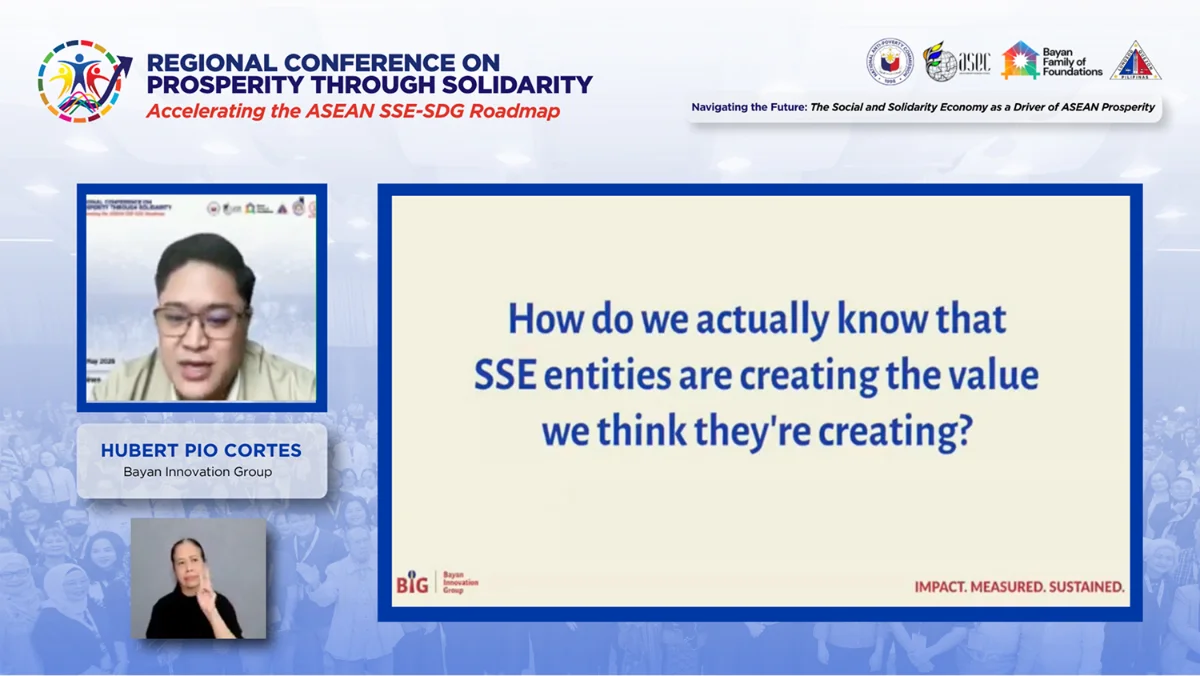
Hubert Pio Cortes, Executive Director of Bayan Innovation Group, took part in Panel 7: Innovations in Social Impact Assessment of SSE Entities, where he underscored the importance of empowering grassroots communities and SSE entities to become active players in the process of social impact assessment.
“SSE entities and grassroots communities must be at the center of the process. Assessment should be participatory, not extractive. When communities and SSE members help shape what gets measured and how, and when their voices define what success looks like, social impact assessment becomes a tool for empowerment rather than merely a mechanism for external accountability.”
No One Left Behind
The event concluded with a two-part panel discussion. The first segment brought together all panel moderators to share key highlights, insights, and recommendations from their respective sessions. The second segment focused on future directions and strategies for advancing the SSE movement, building on the discussions, commitments, and collaborations established throughout the forum.
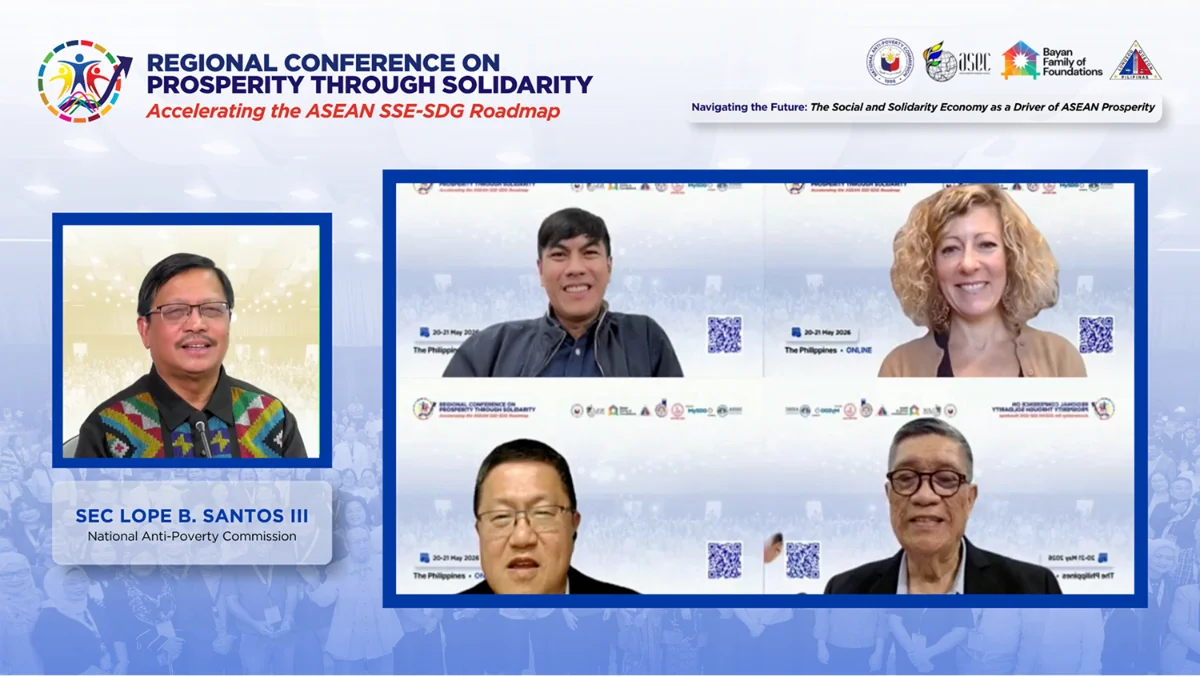
Undersecretary Mary Rose Villaflor, Deputy Director-General of NAPC, delivered the closing remarks, grounding the forum’s ambitions in a commitment to inclusive governance.
“In the Philippines, we involve all sectors of society in policy discussions, program implementation, and monitoring. We also place an important emphasis on local and indigenous community-led practices in carrying out solutions to poverty.
This multi-sectoral convergence allows us to ensure that no one is left behind in governance, ensuring a more holistic approach to policymaking and program implementation.”
Building on the commitments and regional partnerships established during the forum, stakeholders are set to reconvene in October 2026 for the second phase of this two-phase initiative.
The succeeding conference aims to further align SSE initiatives with the broader ASEAN agenda and translate regional commitments into concrete, community-driven action toward a more inclusive, resilient, and sustainable future.
The conference was hosted by the lead convenor: the National Anti-Poverty Commission—with the support of its co-convenors: the Department of Trade and Industry, the Quezon City Government, the Asian Solidarity Economy Council, the Bayan Family of Foundations; and partner organizations: the Quezon City Public Employment Service Office, HomeNet Southeast Asia, Global Forum for Social and Solidarity Economy, mySDG Academy, and the All-Party Parliamentary Group Malaysia.